

Practice from the first hour
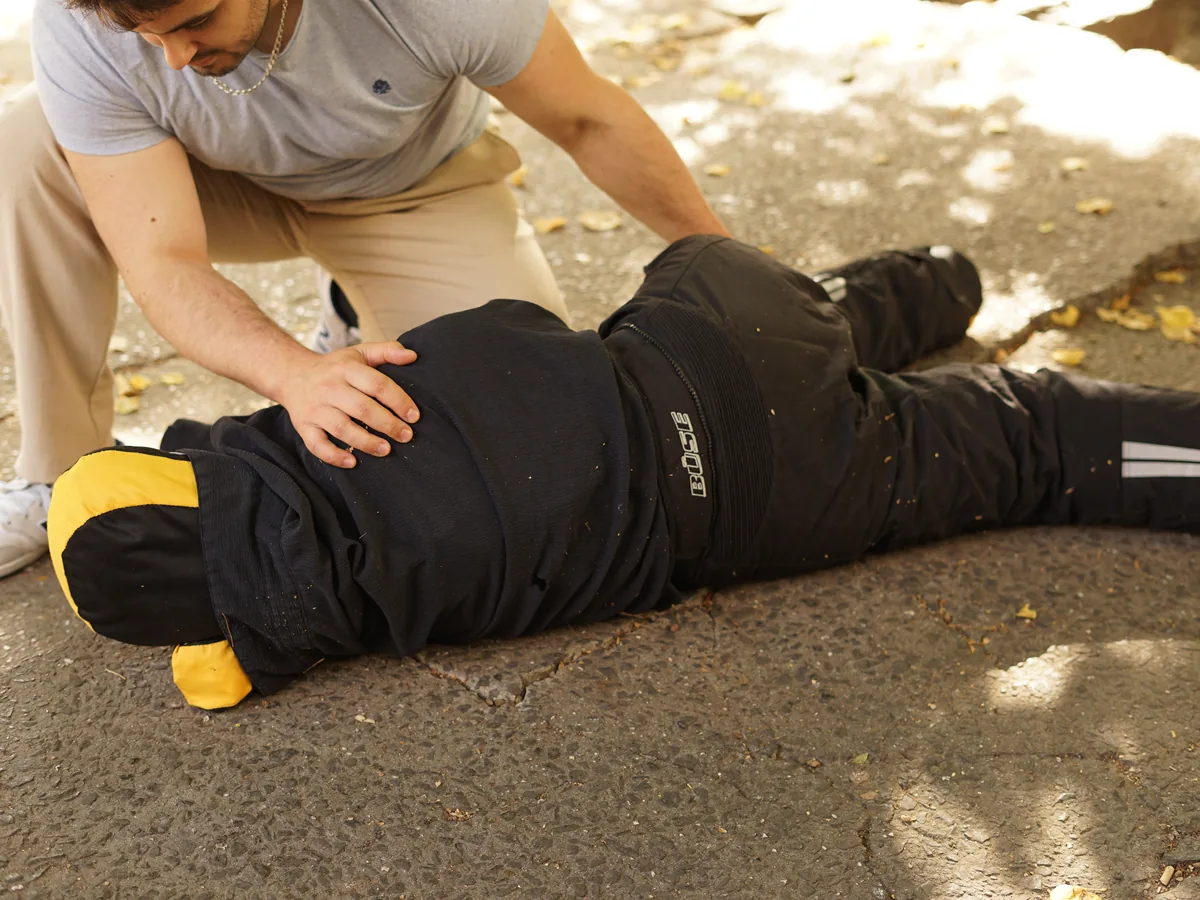
Adult, child and infant manikins, training AEDs, scenario equipment. Everyone practises to acquire the right technique.
Field first responders who train in Brussels, so that everyone knows what to do when it matters.
When someone collapses, goes into cardiac arrest or gets injured, the first minutes belong to the bystanders. Our job is to turn those bystanders into people who act.
Pelican Brussels is a team of first responders and trainers based in Brussels. We train individuals in public sessions open to all, and companies, institutions and NGOs directly at their premises. The content is the same for everyone: simple skills, repeated until they become reflexes.
We follow the guidelines of the European Resuscitation Council, of which we are a member, and we are recognised by the Belgian FPS Employment for the training of workplace first aiders.

An ambulance first responder for several years and holder of the Belgian emergency medical care certificate, Tom has spent hundreds of hours on board a 112 ambulance. That is the experience he brings into the classroom: real situations, skills that have actually been used, and one simple requirement, that every participant leaves able to act.
Before founding Pelican Brussels in September 2025, he coordinated first aid training for the Brussels-Capital Region within a large humanitarian organisation for three years: a pool of 130 trainers and volunteers, more than 7,500 people trained over the period, and the training of the trainers themselves.
Pelican Brussels is young, but the experience behind it is not. Here is how we got here.

Starting out as an ambulance first responder. 112 call-outs lead to one observation: without a bystander stepping in, the situation is often already going badly.
Regional coordination of first aid training in Brussels: more than 7,500 people trained and an active teaching approach proven at scale.
An independent, human-sized organisation offering companies and individuals short, practical, jargon-free training.
Several hundred hours of in-company training, the launch of our online manual and e-learning, and opening up to the general public.
At Pelican, we believe in field experience.
Our trainers come from different backgrounds: military, physiotherapists, ambulance crews, first responders, healthcare workers. All of them practised their profession before teaching it, and most still do.
That diversity is deliberate. An ambulance crew member does not describe a cardiac arrest the way a physiotherapist talks about a sprain, and a soldier does not approach stress management like a nurse. In the classroom, that mix of perspectives is what makes the skills stick, because they are taught by people who have used them.

Adult, child and infant manikins, training AEDs, scenario equipment. Everyone practises to acquire the right technique.
Our content follows the European Resuscitation Council guidelines and the Belgian Code on well-being at work.
A workshop, an office, a school, a building site: scenarios reflect the actual risks of your workplace.
People learn better when relaxed. The tone is direct and human, the words simple and warm. No needlessly complicated jargon, no crushing theory.



The ERC is the European reference body for resuscitation. As a member, we follow its guidelines and their updates for CPR, AED use and first aid.
erc.edu →
Our trainers are certified by the Belgian Red Cross and take regular refresher courses there, to keep up with changing guidelines and practice.

Pelican Training is authorised to train and retrain workplace first aiders under the Belgian Code on well-being at work. Our certificates are valid for your employer obligations.
Check the official list →Join a public session to meet our trainers, or request a quote to train your team on-site.